
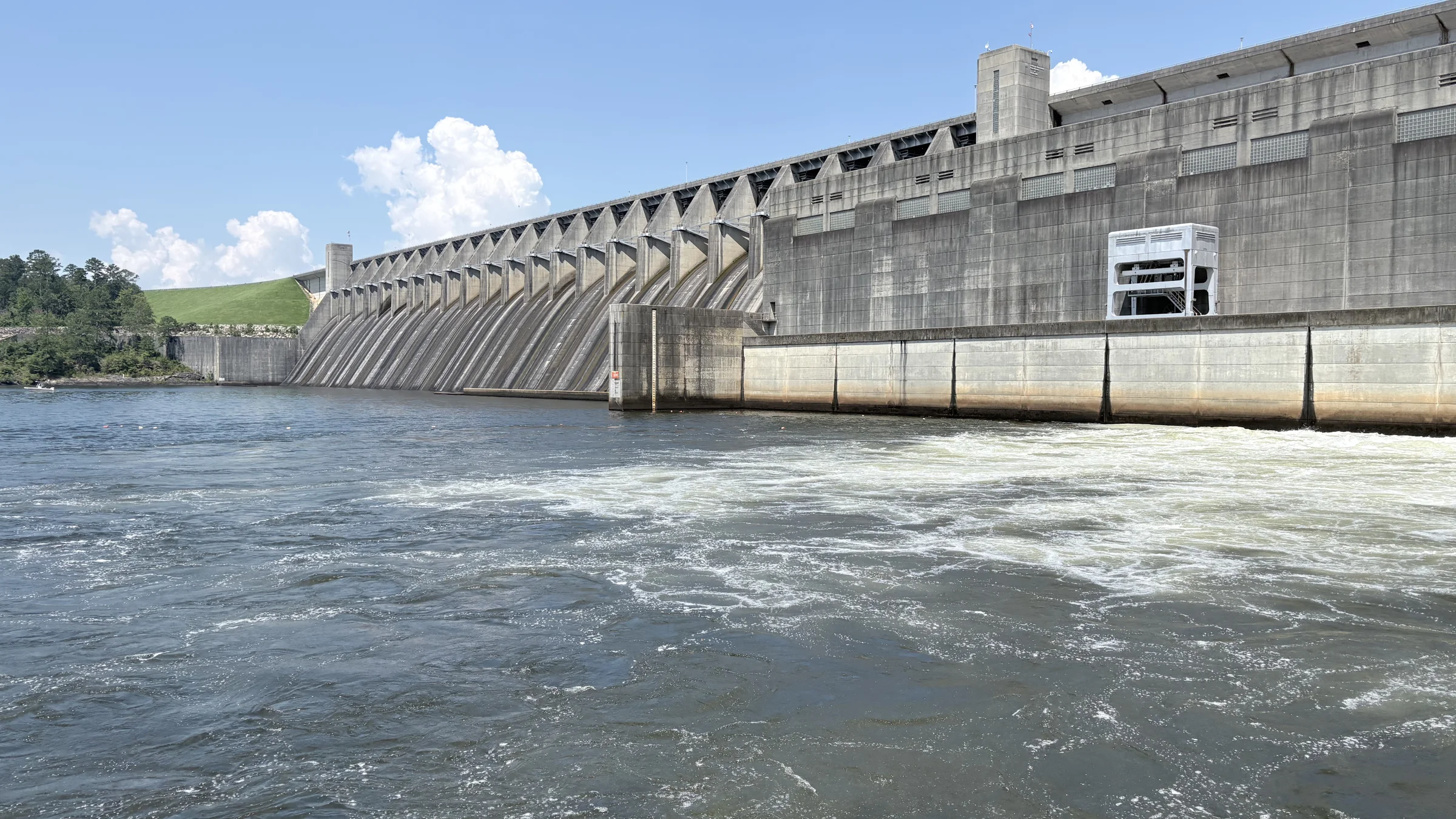
Build flexibility into your energy project
EEH connects generation and storage choices to the site, operating duty and investment case.
Start with the decision you face
The need
Reliable output, flexibility and an asset configuration that fits the connection and commercial model.
How EEH supports you
We assess opportunities, coordinate development and specialist engineering, and prepare the studies and financial documentation needed for financing discussions through our network.
What we need to start
Site and land status, connection information, measured demand or resource data, operating objectives and development stage.
Turn the opportunity into an assessable case
Variable generation creates a need to balance supply and demand over different periods. Storage is one flexibility option; its value depends on the operating duty, grid constraints and accessible revenues. We test these conditions before selecting equipment.
Institutional context: European Commission — Energy storage
Assess your market and investment case ↗Connect the work from the outset
We define the opportunity, coordinate the project workstreams and prepare financial and project documentation. Financing structuring includes access to our network of financial institutions and investors, with decisions made independently by each counterparty.
- 01
Opportunity assessment
- 02
Feasibility
- 03
Development & permitting support
- 04
Engineering, procurement & construction (EPC) partner coordination
- 05
Financing structuring
- 06
Implementation & operation support
Match the scope to the operating need
Solar photovoltaics (PV) & hybrid plants
Develop the generation asset around the site, the grid and the commercial use of its output. Evaluate utility-scale, industrial rooftop, carport and PV-plus-storage configurations.
Discuss project requirementsLithium iron phosphate battery storage
Frame the storage requirement in both power and usable energy. Compare complete systems for the intended dispatch pattern, site constraints and investment horizon.
Discuss project requirementsVanadium redox flow batteries (VRFB)
Evaluate flow storage where discharge duration, repeated cycling and lifetime throughput are central to the project. Compare the full installed system against the same duty cycle used for alternative technologies.
Discuss project requirementsHybrid battery and flow storage
Assess whether assigning different duties to different storage technologies improves the project case. The additional controls, interfaces and costs must be justified by the model.
Discuss project requirementsHydropower & pumped storage hydropower (PSHP)
Coordinate rehabilitation and development studies across hydraulic, mechanical, electrical and control disciplines. Keep physical asset constraints connected to the investment and delivery plan.
Discuss project requirementsWind generation
Assess standalone wind or wind combined with solar and storage around one connection. We coordinate resource, layout, environmental and commercial workstreams.
Discuss project requirementsCompressed air energy storage
Compressed air energy storage (CAES) requires a complete assessment of storage conditions, compression, expansion and heat management. We bring specialist inputs into a common feasibility brief.
Discuss project requirementsPumped storage hydropower
Pumped storage hydropower (PSHP) combines reservoir, water, civil and electromechanical considerations. We coordinate new developments, conversion assessments and rehabilitation studies.
Discuss project requirementsGeneration and back-up power
Compare generation and back-up configurations against essential loads, required autonomy, fuel logistics and operating constraints. Define transfer, protection, commissioning and maintenance responsibilities.
Discuss project requirementsThermal storage and flexible demand
Assess heating, cooling and recoverable process energy alongside electricity storage. Temperature, operating windows and product quality determine the integration scope.
Discuss project requirementsSolar photovoltaics (PV) & hybrid plants: assessment inputs
+
- Site, shading, structural and land constraints
- Yield assumptions, losses and export limits
- Inverters, protection and grid interfaces
- Storage dispatch, metering and acceptance plan
Agreed output: Options study, preliminary configuration, procurement specification and integration roadmap.
Lithium iron phosphate battery storage: assessment inputs
+
- Required MW, usable MWh and operating schedule
- AC system efficiency, auxiliary loads and degradation
- Thermal management, fire strategy and site layout
- Warranted throughput, augmentation and service terms
Agreed output: Supplier comparison, operating scenarios, lifecycle cost model and acceptance criteria.
Vanadium redox flow batteries (VRFB): assessment inputs
+
- Power-stack and electrolyte sizing
- Tank footprint, containment and auxiliaries
- Temperature limits and guaranteed net output
- Electrolyte ownership, servicing and end-of-life terms
Agreed output: Application-fit assessment, layout requirements and a model-specific technical and commercial comparison.
Hybrid battery and flow storage: assessment inputs
+
- Separate duties and dispatch priorities
- Shared connection capacity and converter interfaces
- Control interactions and fallback modes
- System-level economics versus a single technology
Agreed output: Comparative dispatch scenarios and a documented decision on whether hybridisation adds value.
Hydropower & pumped storage hydropower (PSHP): assessment inputs
+
- Condition assessment and rehabilitation priorities
- Water availability, operating regime and environmental constraints
- Turbine, generator, transformer and protection interfaces
- Construction phasing, outage windows and acceptance
Agreed output: Technical development brief, specialist study scopes and a staged implementation plan.
Wind generation: assessment inputs
+
- Measured resource, wake losses and curtailment
- Land, access, turbine transport and receptors
- Grid capacity and staged development
Agreed output: Study scopes, constraints map and yield assumptions for the financial model.
Compare the duty, then the technology
Battery energy storage systems (BESS), including lithium iron phosphate (LFP) batteries, vanadium redox flow batteries (VRFB), compressed air energy storage (CAES) and pumped storage hydropower (PSHP) need a common comparison boundary.
Duty and dispatch
Power, usable energy, discharge duration, cycles and availability.
Site and interfaces
Land, geology, water, connection, access and environmental constraints.
Net system performance
AC output, auxiliaries, conversion losses and actual operating conditions.
Lifetime economics
Capital cost, degradation, maintenance, augmentation and end-of-life obligations.
Commercial value
Accessible services, revenue assumptions, curtailment and downside scenarios.
Evidence and acceptance
Model-specific test reports, warranties, measurement boundaries and contractual remedies.
Define the inputs and deliverables
01Wind generation & hybrid power
+
Develop a wind project or combine wind, solar and storage around a shared connection.
How EEH supports you
Coordinate resource studies, layout options, connection strategy and the commercial comparison of standalone and hybrid configurations.
From assessment to execution
Screen the site → commission resource and environmental studies → compare layouts and grid options → prepare procurement and delivery requirements.
What we need to start
Land and access rights; measured and modelled resource; grid constraints; environmental receptors; turbine logistics; wake losses and curtailment assumptions.
Your agreed deliverables
Development constraints map, study brief, option appraisal and an integrated energy-yield and financial-model input register.
02Compressed air energy storage · CAES
+
Explore long-duration flexibility where scale, storage conditions and the operating regime may suit compressed air.
How EEH supports you
Bring storage, compression, thermal-management and power-generation specialists into a common feasibility scope.
From assessment to execution
Define the duty → screen underground or engineered storage options → model complete-system performance → assess integration, permitting and procurement.
What we need to start
Geology and containment; pressure and thermal cycles; heat sources and losses; compressor and expander selection; auxiliaries; connection capacity; operating constraints.
Your agreed deliverables
Site-screening report, system boundaries, feasibility study brief and a comparable lifecycle-cost case. Supplier efficiency claims need an agreed measurement boundary.
03Pumped storage hydropower (PSHP)
+
Assess a new pumped storage scheme, conversion opportunity or upgrade for flexible generation and storage.
How EEH supports you
Coordinate hydrological, geotechnical, civil, electromechanical, environmental and commercial workstreams.
From assessment to execution
Screen reservoirs and elevation → assess water balance and ground conditions → compare configurations → sequence approvals, grid connection and delivery.
What we need to start
Reservoir rights; usable head and volume; water availability; seasonal constraints; civil works; pump-turbine operating envelope; grid services and environmental impacts.
Your agreed deliverables
Integrated feasibility roadmap, interface register, construction-risk review and a scenario-based investment case.
04Vanadium redox flow batteries · VRFB
+
Evaluate storage for a specified duration, cycling pattern and operating life.
How EEH supports you
Coordinate comparison of stack power, electrolyte energy capacity, balance-of-plant design and contractual performance.
From assessment to execution
Set the dispatch profile → size and compare systems → review model-specific evidence → define integration and acceptance tests.
What we need to start
Usable AC energy; electrolyte ownership or leasing; pump loads; temperature limits; containment; footprint; stack maintenance; warranty and end-of-life responsibilities.
Your agreed deliverables
Technology comparison and procurement specification. Lifetime, efficiency and cost assumptions remain tied to the offered model and contract.
05Thermal storage & industrial flexibility
+
Shift heating or cooling demand and assess recoverable process energy.
How EEH supports you
Coordinate process-energy mapping and compare storage, heat recovery, electrification and flexible operating options.
From assessment to execution
Measure demand → define temperature and production constraints → compare configurations → plan a controlled integration programme.
What we need to start
Hourly or finer load data; temperature levels; heat-transfer media; operating windows; backup requirements; shutdown access and product-quality constraints.
Your agreed deliverables
Energy balance, integration concept, operating scenarios and a measurement plan for validating savings.
Find the route for your organisation
State-owned enterprises & utilities
Asset modernisation → coordinated project preparation
See support for your organisationIndustry & heavy industry
Energy and process constraints → integrated solutions
See support for your organisationEnergy developers & IPPs
Development obstacles → a sequenced delivery plan
See support for your organisationInvestors, funds & financial institutions
Investment uncertainty → an assessable project case
See support for your organisationDefine responsibility before delivery
Store Your Energy
SYE is EEH’s engineering, procurement and construction (EPC) partner.
The contracting entity, responsibilities and commercial terms are agreed for each project. Listing does not imply exclusivity, certification or committed financing.