
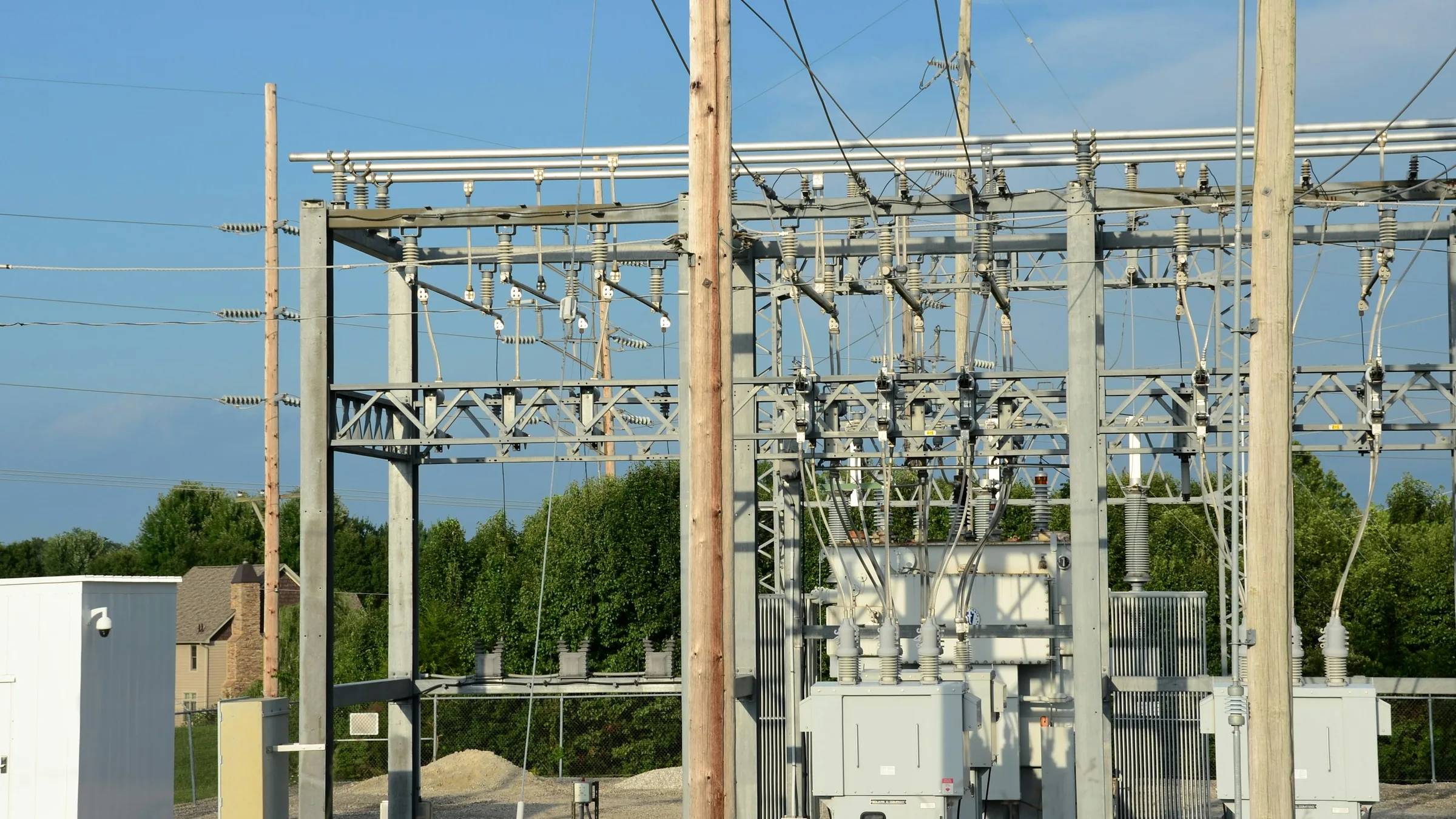
Build resilience around critical operations
EEH supports energy resilience for defence and critical infrastructure, alongside drone services, sales and development.
Start with the decision you face
The need
Continuity of essential operations, clear supply dependencies and an energy plan that fits the site’s mission.
How EEH supports you
We assess energy requirements, coordinate specialist technology and project interfaces, and prepare feasibility, financial and implementation documentation for financing discussions.
What we need to start
Essential loads, continuity objectives, site interfaces, fuel and access constraints, responsible entities and permitted scope.
Turn the opportunity into an assessable case
Resilience planning starts with the services that must continue through an interruption. We assess local generation, storage, back-up and operating controls together, including opportunities to reduce fuel dependency where the duty and site conditions support them.
Assess your market and investment case ↗Connect the work from the outset
We define the opportunity, coordinate the project workstreams and prepare financial and project documentation. Financing structuring includes access to our network of financial institutions and investors, with decisions made independently by each counterparty.
- 01
Opportunity assessment
- 02
Feasibility
- 03
Development & permitting support
- 04
Engineering, procurement & construction (EPC) partner coordination
- 05
Financing structuring
- 06
Implementation & operation support
Match the scope to the operating need
Energy resilience and microgrids
Define essential loads, islanding requirements, operating priorities and restoration sequences. Compare storage, local generation and grid-connected configurations.
Discuss project requirementsBack-up and sustainable power
Evaluate back-up duty, fuel logistics and renewable integration against continuity requirements. Coordinate specialist design, procurement interfaces and acceptance planning.
Discuss project requirementsDrone systems and services
EEH is engaged in drone services, sales and development. Our development focus includes fire monitoring, infrastructure inspection, mapping and site-monitoring applications, with mission-specific validation before deployment.
Discuss project requirementsProgramme and industrial coordination
Structure the project around defined parties, responsibilities, technical interfaces and intended use. Specialist requirements and applicable authorisations are established for each engagement.
Discuss project requirementsDrone operations are subject to applicable EU and national aviation rules. Project-specific operating requirements and authorisations must be established.
Turn aerial information into practical decisions
EEH is developing drone service and infrastructure projects for municipalities, private companies, heavy industry and critical-site operators. We start with the information you need, then assess the mission, equipment, operating arrangements and reporting.
Fire monitoring and early detection
Assess thermal and visual monitoring to identify signs of fire, locate anomalies and support ground teams with situational information. The scope is detection and observation, not aerial firefighting.
Discuss your site and applicationIndustrial and infrastructure inspection
Plan visual or thermal surveys of energy assets, solar and wind installations, roofs, façades, roads, bridges and construction sites. Define the findings and inspection report needed for maintenance decisions.
Discuss your site and applicationMapping and asset information
Develop orthophoto, photogrammetry, three-dimensional mapping and asset-inventory workstreams. Outputs can support geographic information systems (GIS), volume assessments, change detection and digital twins.
Discuss your site and applicationPerimeter and alarm verification
Assess aerial observation for industrial sites, warehouses, depots and critical infrastructure. Define operator review, alarm verification and handover to the responsible security team before any deployment.
Discuss your site and applicationEnvironmental and municipal monitoring
Assess waste and pollution observations, suspected unauthorised construction, river corridors, reservoirs, forests, vegetation and terrain change. Findings support follow-up by the responsible client or authority.
Discuss your site and applicationDisaster and incident assessment
Scope aerial information for floods, landslides, post-fire monitoring, damage assessment and search support. Missions require coordination with the responsible emergency services and do not replace ground response.
Discuss your site and applicationYour project options
Assess a defined inspection, scheduled monitoring or a pilot for managed drone services. Docking stations, remote operations and software integration are development options, not an existing EEH deployment claim.
What you receive
An agreed application brief, equipment and operator requirements, reporting scope and pilot assessment plan. A project can progress to a managed-service proposal after technical, operating and commercial validation.
What we need to start
Site location, area and asset types, the information required, frequency, existing alarms and systems, data-access needs and the person responsible for follow-up.
- 01
Define the client decision
- 02
Assess site and mission constraints
- 03
Agree equipment and operator roles
- 04
Validate a pilot and outputs
- 05
Review costs and financing
- 06
Decide the service scope
We coordinate equipment selection and sales enquiries, integration requirements, feasibility and financial documentation. Event documentation and transport-infrastructure assessment are considered case by case; active traffic control is not part of this proposed service scope.
Deployment depends on mission-specific technical validation, applicable EU and national aviation rules, privacy and security requirements, and any necessary authorisations. No specific EEH operational authorisation, continuous coverage, response time or detection performance is claimed. Biometric identification, aerial firefighting and tactical ignition are outside this scope.
Discuss a drone project with EEH ↗Find the route for your organisation
State-owned enterprises & utilities
Asset modernisation → coordinated project preparation
See support for your organisationMunicipalities & public authorities
Local priorities → structured investment programmes
See support for your organisationIndustry & heavy industry
Energy and process constraints → integrated solutions
See support for your organisationDefence, security & critical infrastructure
Continuity requirements → resilient energy systems
See support for your organisationDefine responsibility before delivery
We assess specialist requirements and partner roles for the agreed project scope. See our confirmed EPC partnership ↗